The Beach Outside the Hotel Window.
On what it costs to run a serious awards program, and why the answer isn't fewer awards.
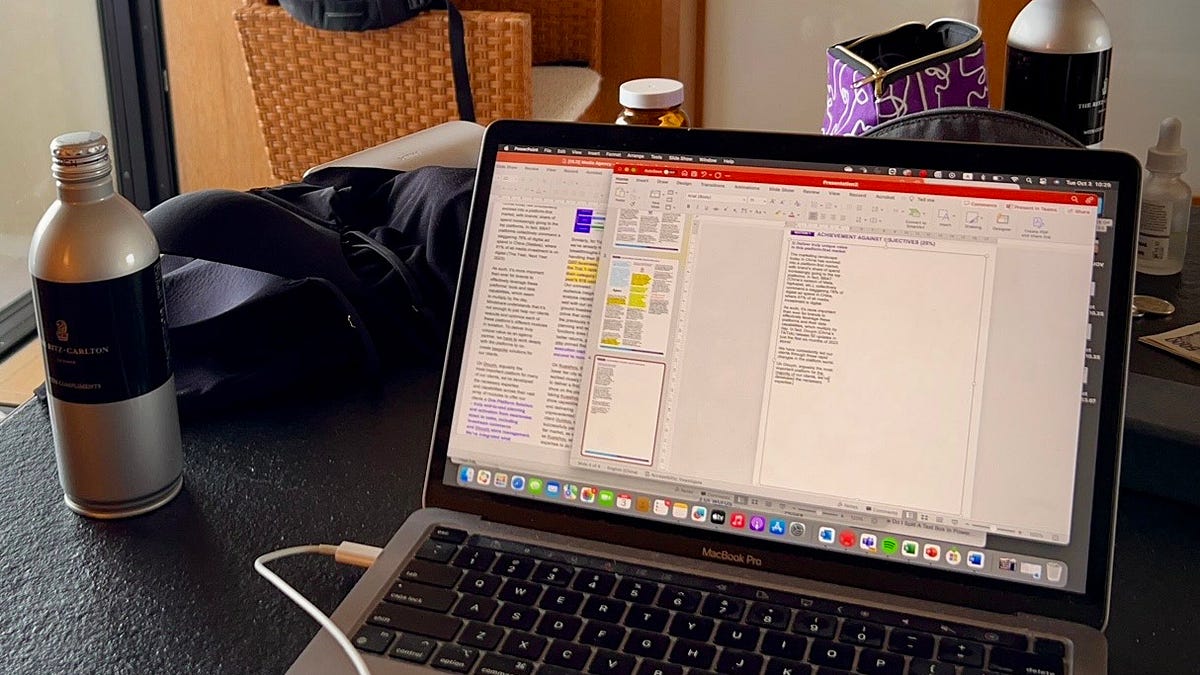
10:53am. October 3rd, 2023. Okinawa. Thank you iPhoto for archiving my photo of mirth at that exact moment.
The rest of China was on Golden Week. Family holiday. My wife and the grandparents were out playing with our son. The room was quiet, sun outside, the kind of day you don't want to spend inside.
The laptop was open on a Teams call. One of our best strategists on the other end. Agency of the Year entries on the screen. Deadline wasn't moving.
Spent two hours on it. Tweaked copy. Hunted for the stat that would make the results section land, not just list. Moved a paragraph because the narrative arc wasn't quite right. Missed lunch. Made the pool after the nap. Sent a screen recording to the strategist afterwards, both of us working from the same quiet recognition that this was simultaneously ridiculous and completely normal.
No regrets. We won. Three months later, the agency had their moment. Four Campaign Asia wins: China Digital Agency of the Year Gold, China Media Agency of the Year Gold, Greater China Digital Agency of the Year, Greater China Media Agency of the Year. A full sweep. Leadership and our best young talent in the ballroom getting the recognition they'd earned. Worth every hour.
But that morning has stayed with me, not as a war story, but as a structural diagnosis. Because the part of the story that matters isn't the hotel room or the missed lunch. It's what was happening on the other end of the call.
That strategist had been living inside those entries for two weeks before October 3rd. Not doing one pass and waiting. Actively working: chasing campaign details across offices in Shanghai, Beijing and Guangzhou, running after client teams for results and testimonials, building the evidence architecture that makes an entry credible rather than just confident. Multiple full passes done. The work was genuinely good.
It just needed the final round of judgment that comes from having seen, over years, what wins and what doesn't.
That judgment is always the last step. And it always lands on the same people.
In most agencies running serious awards programs, the final edit belongs to a very small number of people. Usually the most senior strategist in the room. Often the CEO. Not because they've failed to delegate, but because the work of making an entry competitive, not just complete, requires a kind of pattern recognition that only accumulates over time.
The instinct for which campaigns genuinely compete at which shows. The sense of when a narrative is working and when it's structurally sound but emotionally flat. The ability to read a jury's published criteria and know what they're actually scoring this year, not just what they've listed.
That last one is more valuable than it sounds. Jury priorities shift year by year. The agencies that track those shifts consistently outperform the ones that read last year's brief and assume it still applies.
This judgment isn't taught formally. It accumulates. And it becomes, over time, one of the most valuable things a senior leader carries into awards season.
It's also finite. And awards season doesn't respect the rest of the calendar.
Here's where this gets commercially interesting.
Awards matter for reasons that go beyond the trophy shelf. The case study that wins a Gold at the Effies becomes the centerpiece of the next new business pitch. The Cannes shortlist becomes the answer to the client who wants to know why you pushed them to increase the fee. The recognition gives the people who built the work a genuinely public moment, and pride compounds: a team that wins wants to raise the bar on the next brief.
A serious awards program is one of the more reliable commercial engines an agency has. Not because it produces trophies. Because it produces proof. Proof of strategic thinking, of the ability to build campaigns that move both audiences and results. That proof is what supports pitch wins, defends pricing, and builds the reputation that means the next client conversation starts somewhere different.
Which means the cost of running the process badly isn't just operational. It's commercial.
The fully-loaded cost of a serious entry: fees, production costs, plus the senior time it actually takes to do it properly. That number ran consistently between $6,000 to $12,000 per entry. Most agency leaders know this instinctively. Fewer have modeled what it means across a full competitive season, multiplied across 15 or 20 shows.
The argument is usually that the program pays for itself in new business. That's often right. But it only holds if the program is actually working: if the entries going in are as strong as the campaigns they represent, if the right shows are being entered, if the process produces results rather than just activity.
After 13 years building one of the more competitive agency awards programs in Asia, the bottleneck was never the campaigns. The work competed globally. The bottleneck was the distance between a good campaign and a competitive entry.
That distance was filled with construction work: research, structural drafting, iteration, evidence gathering, and finally the judgment that turned a well-built entry into one a jury would remember.
Most of that construction work doesn't require the judgment that makes the final edit valuable. It requires time, organisation, and a clear process. But in the absence of a better system, it lands on the same people as the judgment.
Shortlist was built to separate those two things.
Upload a campaign and get specific entry directions: real shows, real categories, win likelihood scores, strategic angles built on jury intelligence from 20+ shows. A first draft follows, in the agency's voice, ready for expertise to be applied rather than for structural revision to happen first. Jury evaluation before anything goes near a judge. Coach feedback on exactly what to fix. Press materials when results land.
At every step, the final call belongs to the person who knows the work. The judgment that makes an entry competitive isn't being replaced. It's being given something worth applying it to, sooner.
The beach was outside the hotel window on October 3rd. The deadline was on the screen. The goal, eventually, was to build something that meant that version of the day didn't have to keep repeating.
Your final edit, brought forward as fast as possible.
Shortlist is an awards intelligence system for agencies. gotshortlisted.com
Your final edit, brought forward as fast as possible.
30+ shows. Unlimited entries. The judgment stays yours.
Start free trial