The Last Person in the Room
Senior strategists aren't being wasted in awards season. They're being rationed.
There is a specific expertise that makes the difference between a decent award entry and one that makes shortlist. Most people who have worked in agencies for long enough know roughly what it is. Fewer can describe it precisely.
It's not writing ability. Strong writers who've never been near an awards jury can produce fluent, well-structured entries that don't win. It's not strategic intelligence either. Smart campaigns entered in the wrong categories, or framed through the wrong angle for the specific jury scoring them, consistently underperform work that's strategically simpler but better positioned.
The expertise that matters is a form of pattern recognition. Which campaigns actually compete at which shows, given this year's jury, this category's recent winners, this particular show's unspoken preferences. How to structure a narrative so it pays off in the order a judge reads it, not the order that feels logical when you know the campaign inside out. Which proof points a specific jury rewards and which they've quietly started discounting, even though they're still listed on the brief.
That knowledge takes time to build. It comes from having been inside the room: as an entrant, as a judge, as someone who has tracked the same shows' results across enough years to notice the drift. It's the thing most agencies have only one or two people who carry. And for most of awards season, those people are somewhere other than where the knowledge is needed most.
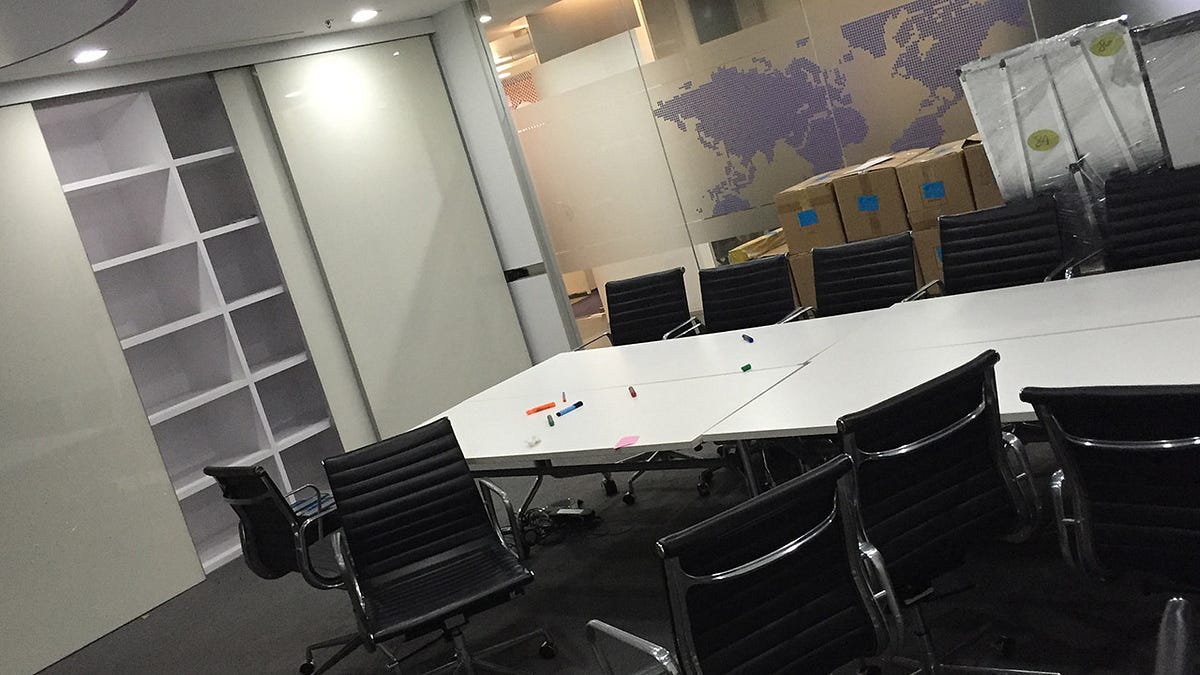
Room A. November 2015. The old Mindshare office in The Center. A team walking me through six campaigns ahead of awards season: the kind of session that, at an agency of 600 people in the middle of a new business run that was doubling the client roster, was always competing with fifteen other things for time.
They went through each campaign methodically. The fifth was a KFC partnership with League of Legends, built around KFC's relationship with China's gaming community. Strong work. They were pitching it as an integrated media campaign entry. It qualified.
Then they mentioned, almost in passing, an in-game food delivery mechanic.
Stopped them. Wait. In-game delivery? Why? How?
They explained the insight: ordering food while you're mid-match means logging out. In a live online game, that's not a minor inconvenience. The mechanic solved that. It let players order without breaking the game.
That was the entry. Not the partnership. Not the integration. That mechanic, sitting at the precise intersection of gaming behaviour and brand utility, was the thing a jury would remember after reading forty submissions in the same category. Everything else was context for it.
Told them to set aside what they'd been building and start from there.
They were early enough in the process that it didn't cost them weeks. That time went back into the entries themselves. Because the direction was settled, the strategy team wrote fully bespoke copy for every show and category they entered, tailored to the specific jury reading it. Not one entry repurposed across multiple submissions. Each one built for the room it was going into. That level of craft at that volume is only possible when the direction question is answered before the writing starts.
That campaign won thirty-five times across the 2016 award cycle. When most brand marketers outside China were still uncertain what to do with gaming partnerships, that number reflected something specific: the insight didn't require a jury to understand China's gaming culture. It only required them to understand gamers. The mechanic translated because the problem was universal. You can't step away mid-match.
But the reason it worked wasn't just the insight. It was the timing. They'd come before drafting, not after. That session in Room A was the exception. Most of the time, by the time an entry reaches the strategy lead for review, the framing has already calcified. Three drafts in, the team is attached to the angle they've been building, the deadline is close, and redirecting means starting over. So the redirect doesn't happen. The entry goes in as an integrated media campaign. It does fine. It doesn't win thirty-five times.
At Mindshare's scale, the volume of clients, the number of campaigns worth entering, the size of the team needing that one review, there was never enough bandwidth to replicate Room A consistently. Getting that early read, fast enough to actually change direction before the drafting started, was the thing I never fully solved.
The concern senior strategists raise about AI tools is worth engaging with honestly, because it's not wrong.
The pattern recognition described above, knowing which angle a Cannes jury rewards versus a WARC jury, reading the gap between a draft and its ceiling, knowing when a results section is credible and when it's going to raise flags in the room, can't be replicated by a language model. Shortlist doesn't try.
The same concern applies to junior strategists, and it deserves the same honest answer. If awards writing is where they learn to think, does a tool that handles construction remove that pipeline? The blank page is not where the learning happens. It's where the hours go. The learning happens in the feedback loop: understanding why a particular direction works for this show and not that one, seeing an entry evaluated against jury criteria and watching where it falls short, closing the gap between what the entry claims and what the coach says the jury will actually reward. A junior strategist working through the system sees more rounds of rigorous evaluation applied to more entries in a season than they would working the traditional way. The criteria are visible. The reasoning is explicit. The gap between a good entry and a competitive one gets named, not absorbed slowly over years of guessing.
What Shortlist does is move the Room A conversation to step one. The senior strategist arrives with a set of considered directions already mapped against jury intelligence from 20+ shows, each one a specific show, a specific category, a read on the risks before the entry fee is committed. The first draft follows the chosen direction, in the agency's voice, ready to be elevated rather than rescued. Jury mode scores the entry the way a judge would. Coach mode names the gap between the current entry and its ceiling, and the fixes most likely to close it.
The senior person arrives at the moment their expertise matters without having spent three weeks getting there. The junior strategist arrives with more evaluated entries behind them than a full traditional season would have produced. The learning curve doesn't flatten. It accelerates.
The last person in the room will always be the most important person in the process. The expertise that makes an entry competitive doesn't disappear.
But it's finite. And every hour it spends on construction work is an hour it doesn't spend on judgment. For every entry that gets the final edit it needs, there are two more that didn't make it up the priority list. Good campaigns. Competitive work. Entries that would have won if the process had moved faster.
The campaigns that deserved a proper entry but never got one, those are the ones that didn't get their moment. Not because the work wasn't there. Because the time wasn't.
Your final edit, from step one.
Shortlist is an awards intelligence system for agencies. gotshortlisted.com
Your final edit, brought forward as fast as possible.
30+ shows. Unlimited entries. The judgment stays yours.
Start free trial